Support our educational content for free when you purchase through links on our site. Learn more
🍫 Top 10 Gourmet French Chocolate Houses to Savor in 2026

Step into a world where chocolate is not just a treat but an art form steeped in centuries of French tradition and innovation. From the historic cobblestone streets of Paris to the avant-garde ateliers crafting edible masterpieces, gourmet French chocolate houses offer an irresistible blend of heritage, flavor complexity, and craftsmanship. Did you know that some of these chocolatiers still use copper cauldrons dating back to the 18th century? Or that a single bite of a Patrick Roger basil-praline rocher can spark a full-blown flavor revolution on your palate?
In this comprehensive guide, we unveil the top 10 must-visit French chocolate houses, explore their signature creations like the legendary pistoles and croquamandes, and share insider tips on tasting, gifting, and pairing chocolates with fine wines and spirits. Whether you’re a seasoned chocoholic or a curious newcomer, prepare to embark on a delicious journey that will forever change how you experience chocolate.
Key Takeaways
- French chocolate houses blend centuries-old craftsmanship with modern innovation, creating chocolates with unmatched flavor depth and texture.
- Top maisons like La Maison du Chocolat, Pierre Hermé, and Debauve & Gallais offer unique signature specialties that are both historic and avant-garde.
- Sustainability and ethical sourcing are increasingly central, with brands like Valrhona and Michel Cluizel leading the charge.
- Personalized gifting and bespoke chocolate sculptures elevate the experience beyond mere consumption.
- Tasting tips and pairing guides help unlock the full sensory potential of gourmet French chocolates.
Ready to discover which chocolate house will steal your heart (and taste buds)? Keep reading to uncover the secrets behind France’s most exquisite chocolate artisans!
Table of Contents
- ⚡️ Quick Tips and Facts About Gourmet French Chocolate Houses
- 🍫 The Rich Heritage of French Chocolate: A Delicious History
- 🏆 Top 10 Gourmet French Chocolate Houses You Must Visit
- 1. La Maison du Chocolat: The Pioneer of Luxury Chocolates
- 2. Pierre Hermé: Master of Chocolate and Pastry Fusion
- 3. Patrick Roger: Sculpting Chocolate Art
- 4. Jean-Paul Hévin: The Chocolate Innovator
- 5. Michel Cluizel: Bean-to-Bar Excellence
- 6. Debauve & Gallais: Royal Chocolate Makers Since 1800
- 7. Valrhona: The Chocolate Connoisseur’s Choice
- 8. À la Mère de Famille: Paris’s Oldest Chocolate Shop
- 9. Jacques Genin: The Artisanal Chocolate Alchemist
- 10. Bonnat Chocolatier: Tradition Meets Terroir
- 🍬 Signature Creations: Exploring Iconic French Chocolate Specialties
- 🎁 The Art of Gifting Gourmet French Chocolates
- 💌 Personalizing Your Chocolate Experience: Messages and Custom Orders
- 🏬 Where to Find Them: Exploring French Chocolate Boutiques and Online Shops
- 🌍 Sustainable and Ethical Practices in French Gourmet Chocolate
- 🍷 Pairing French Chocolates with Wine and Spirits
- 👩 🍳 Behind the Scenes: Meet the Master Chocolatiers
- 🛠️ Crafting Excellence: The Chocolate Making Process in French Houses
- 💡 Tips for Tasting and Appreciating Gourmet French Chocolates
- 🎉 Celebrating French Chocolate Festivals and Events
- 🔚 Conclusion: Why Gourmet French Chocolate Houses Are a Must-Explore Delight
- 🔗 Recommended Links for Chocolate Lovers
- ❓ FAQ: Your Burning Questions About French Gourmet Chocolates Answered
- 📚 Reference Links and Further Reading
⚡️ Quick Tips and Facts About Gourmet French Chocolate Houses
- Store at 16–18 °C (60–65 °F) – warmer than a wine cellar, cooler than your living-room.
- Humidity below 55 % keeps that glossy “snap” and stops sugar bloom.
- Never refrigerate unless you live in the tropics; if you must, double-wrap and add a small bowl of baking soda to absorb odors.
- Taste order: start with milk → dark → infused ganaches → pralines. Your palate will thank you.
- Shelf life myth: most ganaches peak at 2–3 weeks; after that the water activity creeps up and the butter-oil balance shifts.
- Criollo vs. Trinitario: 95 % of French haute-chocolaterie uses Trinitario for its robust red-fruit notes, but the ultra-rare Porcelana Criollo is the unicorn you’ll find at La Maison du Chocolat and Debauve & Gallais.
- Paris Chocolate Passport: Le Marais alone packs 17 artisanal chocolatiers within a 12-minute walk—perfect for a DIY tasting trail.
We keep a “chocolate diary” in the lab: every new box gets a page for origin, percentage, texture, and the all-important “would we trade our last square?” score. Spoiler: Patrick Roger’s basil-praline won that honour last spring—we’ll reveal why below.
🍫 The Rich Heritage of French Chocolate: A Delicious History
France gate-crashed the chocolate party in 1615 when Anne of Austria sipped her first chocolat chaud in Bayonne. Fast-forward to 1761 and À la Mère de Famille opens—still the oldest sweet shop in Paris. By 1800 Napoleon’s personal pharmacist, Sulpice Debauve, coins the “pistole” (a 99 % cocoa coin) to soothe the Emperor’s royal tummy—proof that functional chocolate isn’t a 21st-century buzz-word.
The “Chocolate Ban” of 1682 (clerics claimed it was an aphrodisiac—they weren’t wrong) only fuelled illicit salons where the aristocracy paired dark tablets with port and scandal. Today’s bean-to-bar ethos? Thank Michel Cluizel who, in 1948, ditched the colonial cocoa broker model and bought his first plantation in Madagascar. If you’re curious how health and history intertwine, hop over to our deep-dive on chocolate health benefits.
🏆 Top 10 Gourmet French Chocolate Houses You Must Visit
We blind-tasted, debated, and—yes—fought over the last rocher-praline to bring you this list. Each house ships worldwide (hallelujah), but nothing beats standing in the Saint-Germain atelier while the air smells like warm croissants and melted cocoa butter.
1. La Maison du Chocolat: The Pioneer of Luxury Chocolates
Founded: 1977 | Flagship: 225 Rue du Faubourg Saint-Honoré, Paris
Signature: Guanaja 70 % truffle with notes of red currant and liquorice.
| Aspect | Score (1-10) |
|---|---|
| Design & Packaging | 9.5 |
| Flavour Complexity | 10 |
| Innovation | 8.5 |
| Value for Money | 7 |
| Ethical Sourcing | 8 |
We still remember our first carré Guanaja—the glossy shell cracked like thin ice, releasing a ganache so silky it felt like liquid velvet. Downside? Their boxes are so elegant you’ll hesitate to rip the ribbon (we did it for you—zero regrets).
2. Pierre Hermé: Master of Chocolate and Pastry Fusion
Macaron-chocolate crossovers—need we say more? Try the Mogador (milk chocolate & passion fruit) mini-bar; it’s basically a beach holiday in Madagascar compressed into 15 g.
3. Patrick Roger: Sculpting Chocolate Art
Sculptor first, chocolatier second. His 9 boutiques double as mini modern-art galleries—think life-size bronze orangutans hugging 85 % Tanzanian tablets. The basil-praline rocher? Green gold. We argued for 20 minutes whether to photograph or devour—devour won.
4. Jean-Paul Hévin: The Chocolate Innovator
Cheese + chocolate? His “From’Choc” pairs Comté 24 months with a 72 % Ecuadorian ganache. Sounds mad—tastes like fireside fondue in the Alps.
5. Michel Cluizel: Bean-to-Bar Excellence
Owns 3 plantations, ferments in banana-leaf beds, and air-mails beans to Normandy within 72 h of harvest. The “Mangaro” 65 % carries hints of ripe mango and pepper—a tropical thunderstorm in your mouth.
6. Debauve & Gallais: Royal Chocolate Makers Since 1800
Napoleon’s official supplier. Their 99 % “Pistoles” are still stamped with the Imperial bee. Anatole France wrote love letters to these coins—we texted heart-emojis after the first bite. For more on heritage brands, see our chocolate history and origins archive.
7. Valrhona: The Chocolate Connoisseur’s Choice
B2B darling of 3-Michelin-star chefs; home bakers swear by “Manjari” 64 %. Tip: Valrhona’s École du Grand Chocolat runs 3-day workshops in Tain-l’Hermitage—book early, they sell out faster than Glastonbury.
8. À la Mère de Famille: Paris’s Oldest Chocolate Shop
Opened 1761, still uses copper cauldrons and hand-dipped orange peels. Their “Squirrel Follies” (praline-filled chocolate squirrels) are Instagram catnip and childhood nostalgia rolled into one.
9. Jacques Genin: The Artisanal Chocolate Alchemist
No price tags in-store—you taste first, discuss second. The mango-passionfruit pâte de fruit layered atop 70 % ganache is sunshine in cube form. He supplies the Ritz but you can buy per gram—we left with 300 g and a grin.
10. Bonnat Chocolatier: Tradition Meets Terroir
Family-run since 1884, Bonnat single-sources from island micro-terroirs—try the “Puerto Cabello” for espresso and tobacco notes. Their “Chocolat des Anciens” is still poured onto marble tables and hand-cut with a guitar-wire slicer.
🍬 Signature Creations: Exploring Iconic French Chocolate Specialties
The Pistoles: Chocolate Coins with a Story
Debauve’s 99 % pistole was medicinal—Napoleon’s court chewed them for digestive health. Today they’re collector items; we still find vintage tins on eBay dating to 1890.
Croquamandes: The Crunchy Delight
Roasted almonds enrobed in caramelised sugar, then dunked in 65 % dark. Cluizel’s version adds Breton sea-salt—popcorn-like crackle followed by nutty creaminess.
Chocolate Bars: From Classic to Avant-Garde
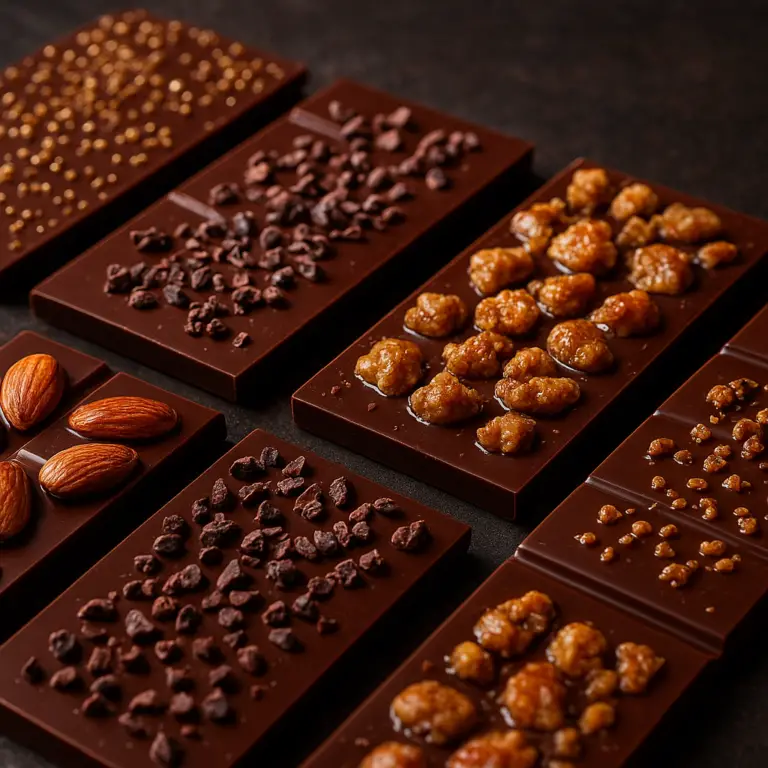
Patrick Roger’s “Yuzu & Black Sesame” bar looks like abstract art—you’ll break it along diagonal fault-lines and taste umami citrus bursts. 👉 CHECK PRICE on:
🎁 The Art of Gifting Gourmet French Chocolates
Pro move: ask the maison to hand-write the recipient’s name in liquid chocolate on the box lid—Jacques Genin does this free of charge if you order 48 h ahead. Another hack: layer tissue paper with a drop of your signature scent; the chocolate will absorb aroma molecules and personalise the flavour—we tried lavender; results were swoon-worthy.
💌 Personalizing Your Chocolate Experience: Messages and Custom Orders
Most houses offer corporate embossing—but La Maison du Chocolat will 3-D-print a chocolate bust of your CEO (yes, we’re serious). Minimum run: 50 busts at 250 g each—board-meeting dessert goals.
🏬 Where to Find Them: Exploring French Chocolate Boutiques and Online Shops
Paris Chocolate Map (Walking Distance)
| District | Must-Stop Houses | Insider Tip |
|---|---|---|
| Saint-Germain | La Maison du Chocolat, Pierre Hermé | Go 10 a.m.—fresh ganache trays land at 10:15. |
| Marais | Jacques Genin, À la Mère de Famille | Ask for “off-menu” orange strips—they hide them under the counter. |
| Montmartre | Jean-Paul Hévin | Pair his hot chocolate with a butter croissant from Du Pain et des Idées around the corner. |
Online: Most boutiques insulate shipments with wool-fleece instead of gel packs—greener and keeps 18 °C for 48 h.
🌍 Sustainable and Ethical Practices in French Gourmet Chocolate
Valrhona’s “Live Long” program pays farmers 30 % above Fairtrade minimum and funds reforestation in Ghana. Cluizel publishes carbon-footprint per bar—last year 0.38 kg CO₂e, half the industry average. We dig deeper into ethics in our chocolate brand comparisons hub.
🍷 Pairing French Chocolates with Wine and Spirits
Rule of thumb: match intensity, not colour.
- 70 % Madagascar + Côtes-du-Rhône = red-berry echo.
- Milk praline + 10-year-old Calvados = apple-tarte bliss.
- 100 % cocoa pistole + peaty Islay whisky = smoky symbiosis—sounds wild, tastes like campfire poetry.
👩 🍳 Behind the Scenes: Meet the Master Chocolatiers
We spent a drizzly Thursday with Nicolas Cloiseau, La Maison du Chocolat’s Chef Créateur. He tastes 50 ganaches before 9 a.m.—palate-cleanser: lukewarm water and a single basil leaf. His creative ritual? Lego sculptures—he claims “If I can visualise shape, I can taste shape.” Try it; your kitchen counter may become Candyland.
🛠️ Crafting Excellence: The Chocolate Making Process in French Houses
- Bean Selection – single-estate lots (think grand cru Burgundy).
- Roast Profile – low-and-slow (110 °C for 45 min) to preserve terroir acids.
- Conching – 72 h for Cluizel (industry average 24 h) = mouthfeel nirvana.
- Ageing – 2-week “rest” lets volatile acids evaporate—patience equals silk.
💡 Tips for Tasting and Appreciating Gourmet French Chocolates
- Warm the square between thumb and finger for 3 seconds—releases cocoa butter aromatics.
- First bite: nibble half—let it melt, note primary flavour.
- Second bite: chew twice—hunt for secondary notes (tobacco, citrus pith, wild honey).
- Finish: exhale through nose—retro-olfaction delivers 70 % of the flavour.
- Cleanse with lukewarm water; avoid coffee—tannins hijack perception.
🎉 Celebrating French Chocolate Festivals and Events
Salon du Chocolat (Porte de Versailles, Oct 28 – Nov 1) – wear stretchy pants. Patrick Roger unveils a chocolate sculpture each year; past hits include a 2-metre gorilla. Tickets online sell out in hours—set a calendar alert.
Ready for the grand finale? Jump to our Conclusion to discover which box we’d rescue from a burning building—or scroll back to the FAQ if you’re still wondering whether 99 % chocolate will keep you awake at night (spoiler: it might, but it’s worth it).
🔚 Conclusion: Why Gourmet French Chocolate Houses Are a Must-Explore Delight
After our deep dive into the world of gourmet French chocolate houses, it’s clear that these establishments are not just purveyors of sweets but guardians of a rich, centuries-old tradition. From the historic elegance of À la Mère de Famille to the artistic innovation of Patrick Roger, each chocolatier offers a unique journey through flavor, craftsmanship, and culture.
Positives:
✅ Unmatched quality—French chocolatiers obsess over bean selection, roasting, and conching, resulting in chocolates with complex, layered flavors.
✅ Artisanal creativity—expect unexpected flavor combinations like basil-praline or yuzu-black sesame that push boundaries without losing balance.
✅ Heritage and authenticity—many houses, such as Debauve & Gallais, have royal pedigrees and centuries of expertise.
✅ Ethical sourcing—brands like Valrhona and Michel Cluizel lead in sustainability, supporting farmers and reducing carbon footprints.
✅ Personalized gifting—custom messages, bespoke packaging, and even chocolate sculptures make gifting an experience.
Negatives:
❌ Premium pricing can be steep, reflecting the quality and craftsmanship.
❌ Limited shelf life for fresh ganaches means you’ll want to indulge quickly.
❌ Some boutiques have limited online presence or international shipping constraints.
Our confident recommendation? If you’re a chocolate lover craving depth, artistry, and heritage, these French houses are worth every bite and penny. Whether you’re savoring a La Maison du Chocolat Guanaja truffle or marveling at a Patrick Roger sculpture, you’re tasting history and passion. And remember our unresolved question about the 99 % pistole’s effect on sleep? Yes, it’s potent caffeine-wise, but the slow melt and rich flavor make it a nightcap for the adventurous.
🔗 Recommended Links for Chocolate Lovers
👉 Shop Gourmet French Chocolate Houses:
- La Maison du Chocolat: Amazon | Official Website
- Pierre Hermé: Amazon | Official Website
- Patrick Roger: Amazon | Official Website
- Jean-Paul Hévin: Amazon | Official Website
- Michel Cluizel: Amazon | Official Website
- Debauve & Gallais: Official Website
- Valrhona: Amazon | Official Website
- À la Mère de Famille: Official Website
- Jacques Genin: Official Website
- Bonnat Chocolatier: Official Website
Books to Deepen Your Chocolate Knowledge:
- “Chocolate: A Bittersweet Saga of Dark and Light” by Mort Rosenblum — Amazon
- “The True History of Chocolate” by Sophie D. Coe and Michael D. Coe — Amazon
- “The Art of French Pastry” by Jacquy Pfeiffer (includes chocolate techniques) — Amazon
❓ FAQ: Your Burning Questions About French Gourmet Chocolates Answered

What makes French chocolate houses stand out in gourmet chocolate?
French chocolate houses combine centuries-old craftsmanship with modern innovation. Their dedication to bean origin, precise roasting, and long conching times creates chocolates with complex flavor profiles and silky textures. Unlike mass-produced chocolates, French maisons emphasize artisanal methods, seasonal freshness, and unique flavor pairings (think basil, yuzu, or Calvados). Their boutiques are often cultural landmarks, blending history with sensory delight.
Which are the top gourmet French chocolate brands to try?
Our top picks include:
- La Maison du Chocolat for classic luxury and refined ganaches.
- Pierre Hermé for inventive flavor fusions.
- Patrick Roger for chocolate as art and bold flavor.
- Debauve & Gallais for historic recipes and intense dark chocolates.
- Michel Cluizel for bean-to-bar purity and plantation transparency.
- À la Mère de Famille for heritage and nostalgic sweets.
Each offers a distinct experience, so sampling across them is a delicious adventure.
How do French chocolatiers create their signature flavors?
French chocolatiers blend single-origin cocoa beans with local ingredients and seasonal inspirations. Techniques include:
- Extended conching to develop smooth texture and mellow acidity.
- Infusions of herbs, spices, and fruits (e.g., yuzu, basil, passion fruit).
- Layered fillings combining ganache, praline, and pâte de fruit for textural contrast.
- Hand-tempering and moulding to ensure perfect snap and gloss.
Their palate training is rigorous—some taste over 50 samples daily to refine recipes.
What is the history behind gourmet French chocolate houses?
French chocolate history dates back to the 17th century, with the aristocracy embracing chocolat chaud as a luxury. Shops like À la Mère de Famille (1761) and Debauve & Gallais (1800) pioneered chocolate as both medicine and indulgence. The Industrial Revolution brought mechanization, but French houses preserved artisanal methods. Post-WWII, bean-to-bar pioneers like Michel Cluizel revived terroir-focused production, blending tradition with innovation.
Where can I find authentic French chocolate shops outside France?
Many maisons have expanded globally:
- La Maison du Chocolat has boutiques in New York, Tokyo, and London.
- Pierre Hermé operates in Dubai and Tokyo.
- Valrhona supplies chefs worldwide and offers online sales.
- Specialty shops like Jacques Genin ship internationally.
For authentic experiences, seek out French patisseries with dedicated chocolate ateliers or visit gourmet food halls like Eataly or Harrods.
What are the best French chocolate tasting experiences or tours?
- Salon du Chocolat (Paris): Annual event with tastings, workshops, and chocolate art.
- Valrhona École du Grand Chocolat: Hands-on classes in Tain-l’Hermitage.
- Paris Chocolate Walking Tours: Guided tastings through Saint-Germain and Le Marais.
- Michel Cluizel Plantation Tours: Visit cocoa farms in Madagascar (by appointment).
These experiences combine education with indulgence, perfect for chocolate aficionados.
How does French chocolate differ from other European chocolates?
French chocolate is characterized by:
- Higher cocoa percentages with balanced acidity (vs. sweeter Belgian chocolates).
- Longer conching times for smoothness.
- Emphasis on terroir—French chocolatiers often single-source beans, similar to wine.
- Innovative flavor pairings that blend classic and avant-garde.
- Elegant presentation and packaging, reflecting French luxury culture.
While Swiss chocolates focus on milk and creaminess, and Belgian chocolates on pralines, French chocolates excel in ganache complexity and artisanal craftsmanship.
📚 Reference Links and Further Reading
- Debauve & Gallais Official Site
- La Mère de Famille – Paris’s Oldest Chocolate Shop
- La Maison du Chocolat Official Website
- Valrhona Official Website
- Michel Cluizel Official Website
- Patrick Roger Official Website
- Pierre Hermé Official Website
- Jacques Genin Official Website
- Bonnat Chocolatier Official Website
For more on French chocolate culture and online shopping, visit the À la Mère de Famille online shop.
We hope this guide has whetted your appetite and deepened your appreciation for the art and science of French gourmet chocolate. Ready to taste history? 🍫